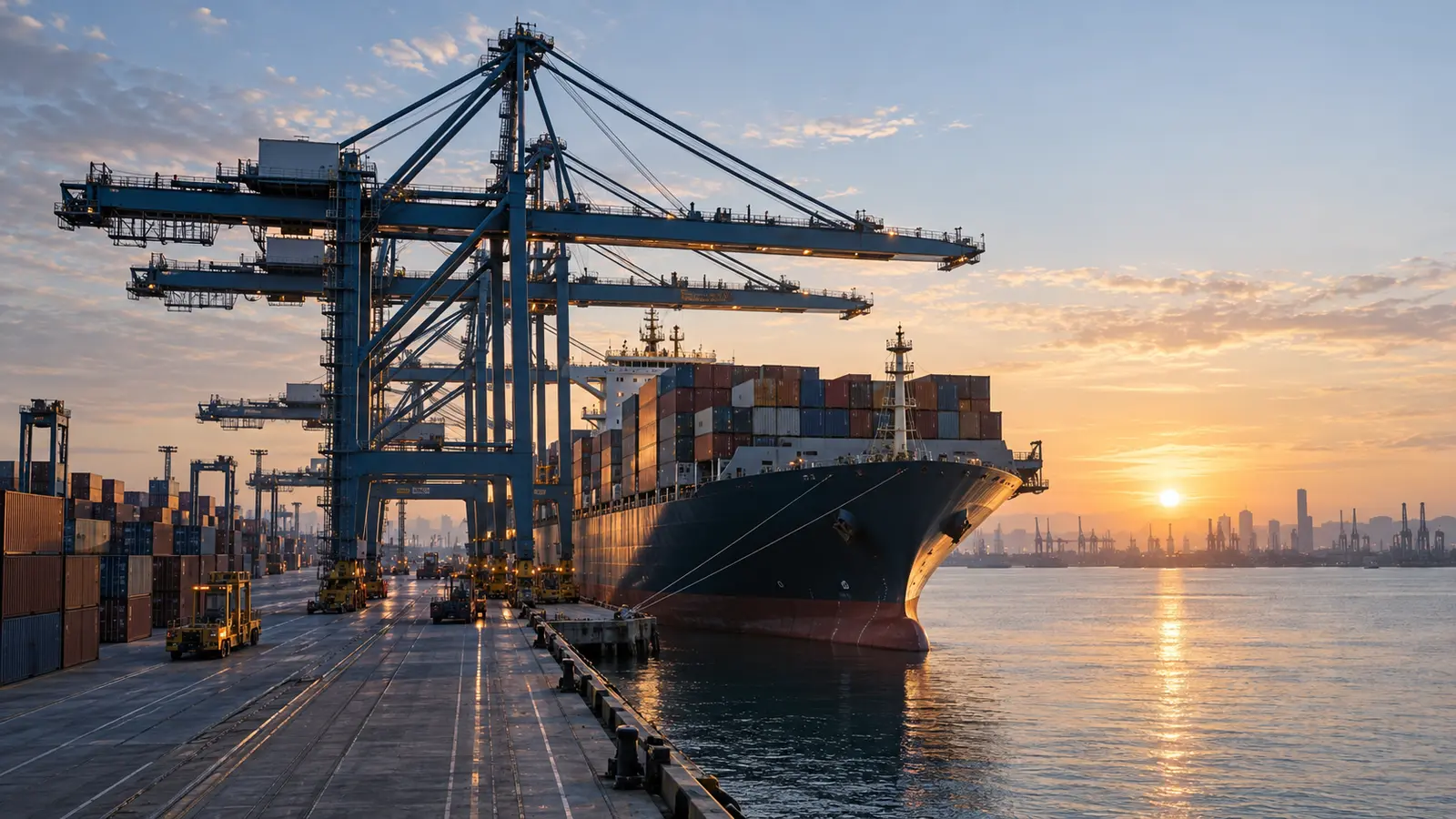
A container terminal links the quay, yard and truck gates, so a useful enquiry begins with the container flow between those areas and the assets serving each stage. The requirement may concern new equipment, parts for an existing asset, maintenance or modernisation, or a project package combining several workstreams. Defining boundaries and responsibilities early creates a reviewable brief without assuming a model or capacity before site data is assessed.
Equipment connected to terminal flow
Requestable families may include STS quay cranes, RTG or RMG yard cranes, mobile harbour cranes, and container-handling equipment such as reach stackers, empty-container handlers, terminal tractors and trailers. Container spreaders and their components, power interfaces and control systems may also form part of the enquiry. The appropriate family depends on the terminal layout, operating method and real interfaces, not on the category name alone.
Service and asset lifecycle
A scope can be organised for supply, installation, preventive maintenance, repair, rehabilitation, or electrical and controls modernisation, with connected work grouped around a defined asset list when needed. Requirements may also involve rails, cables, lighting, power distribution or workshop facilities where they sit within the project boundary. Each included visit, response level and parts obligation is defined in the proposal or contract; this page does not imply blanket coverage or a fixed response time.
Information that supports quotation review
Share the quay and yard layout, container types and intended flow, stacking areas, rail and available power information, plus the asset list, models and serial numbers where known. For new equipment, include the relevant vessel envelope or requested outreach, lift height and load at the working position. For maintenance or upgrades, add the known condition, available drawings, records and photographs, together with the programme and the boundary between operator and contractor responsibilities.
From a single enquiry to a terminal package
A customer can start with one part or service for a named asset, build a multi-line RFQ, or submit a project covering equipment, facilities, installation and handover. For multi-site programmes, shared requirements should be separated from each terminal’s differences, with dates, time zones and documents recorded by location. The review produces a defined scope, open items, responsibilities and proposed stages; it is not automatic project acceptance or confirmation of technical compatibility.
The next step
Start with a defined equipment, part or service enquiry, or use the project and tender form when several workstreams or locations overlap. The available information is reviewed first, after which the proposal identifies items, responsibilities, information gaps, stages, validity and approved terms without assuming unsupported specifications or commitments.