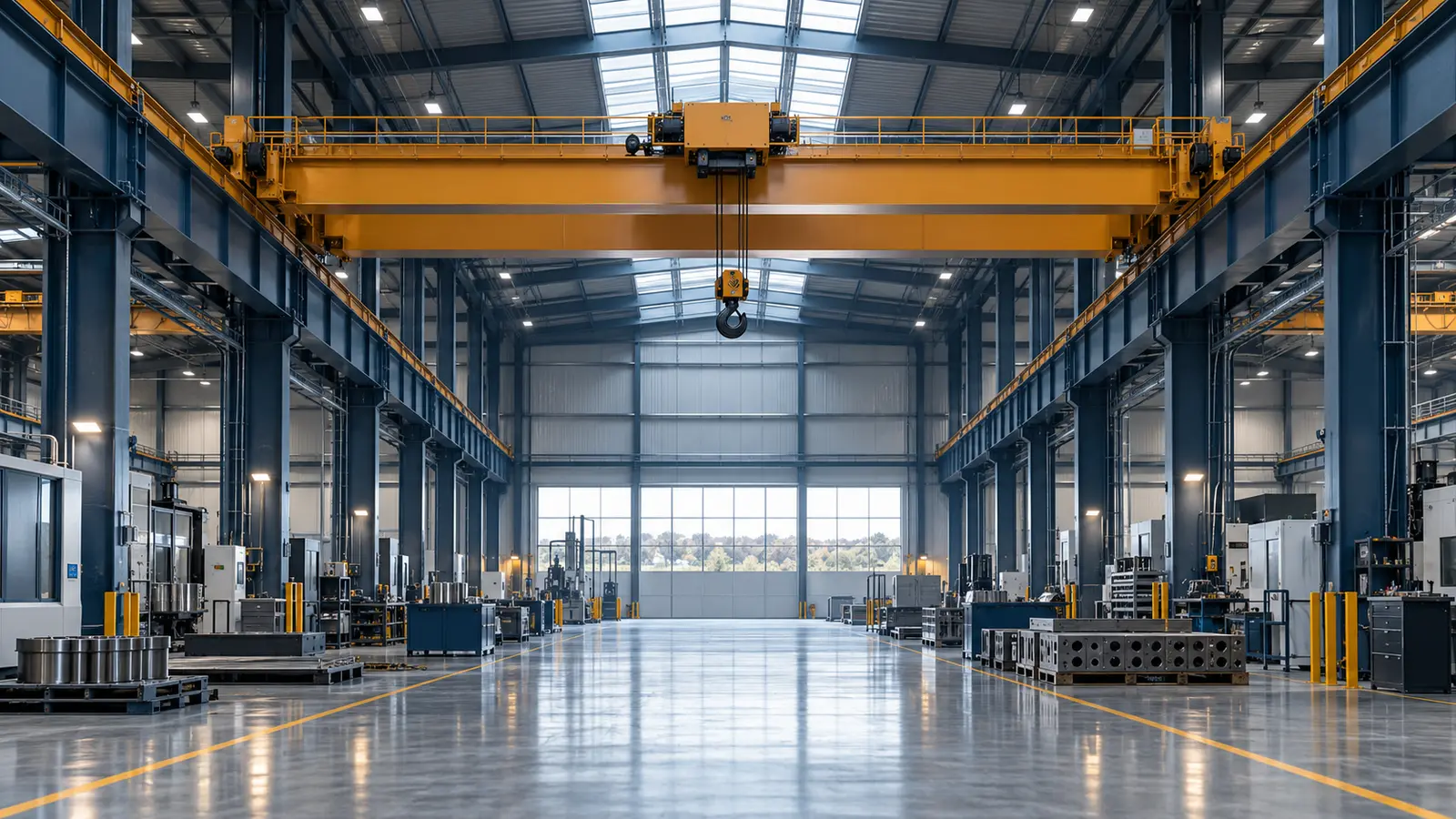
Energy, oil and gas, and industrial facilities require a precise definition of the asset, process, operating environment and site interfaces before lifting equipment or services are selected. Some locations impose special requirements specified by the customer or authorised party; a classification or approval cannot be assumed from the industry label alone. The enquiry can be organised as supply, parts, service, modernisation, shutdown support or a project package according to the real scope.
Equipment tied to the application
Relevant families may include process or heavy-duty overhead cranes, standard overhead, gantry or jib cranes, monorails and hoists, or lifting systems for special environments where documented requirements apply. Mobile or marine equipment may also be relevant at certain sites depending on the asset. Environmental, protection or cleanliness provisions are recorded as specified by the customer and are not added as an unsupported marketing label or certification.
Maintenance, upgrades and outages
The request may cover preventive maintenance, repair and rehabilitation, electrical, controls and drive modernisation, or recurring parts and maintenance packages for named assets. Technical support can also be scoped around a planned outage with the requested skills, location, shifts and responsibilities. The proposal defines coverage, stages, outputs, and the party responsible for inspection and acceptance; urgency does not create an attendance commitment, site permit or authorisation to work.
Site and asset information
Identify the facility area and asset, manufacturer, model and serial where available, together with the process, load, required geometry, power and current system. Add drawings, photographs, fault or maintenance history, outage window, access constraints and the customer’s document requirements. Any special area, material, protection or acceptance requirement should come from the project document or authorised person rather than assumption.
Commercial and technical review path
The process can begin with a service, part or equipment enquiry, or with an integrated project where disciplines, sites and dates overlap. Confirmed facts are separated from items still required, while requirement sources, responsibilities and deviations are recorded in the proposal revision. Submitting the form does not accept customer terms, guarantee comprehensive execution, or provide certification or financial guarantees; those are separate decisions and documents requiring proper authority.
The next step
Start with a defined equipment, part or service enquiry, or use the project and tender form when several workstreams or locations overlap. The available information is reviewed first, after which the proposal identifies items, responsibilities, information gaps, stages, validity and approved terms without assuming unsupported specifications or commitments.