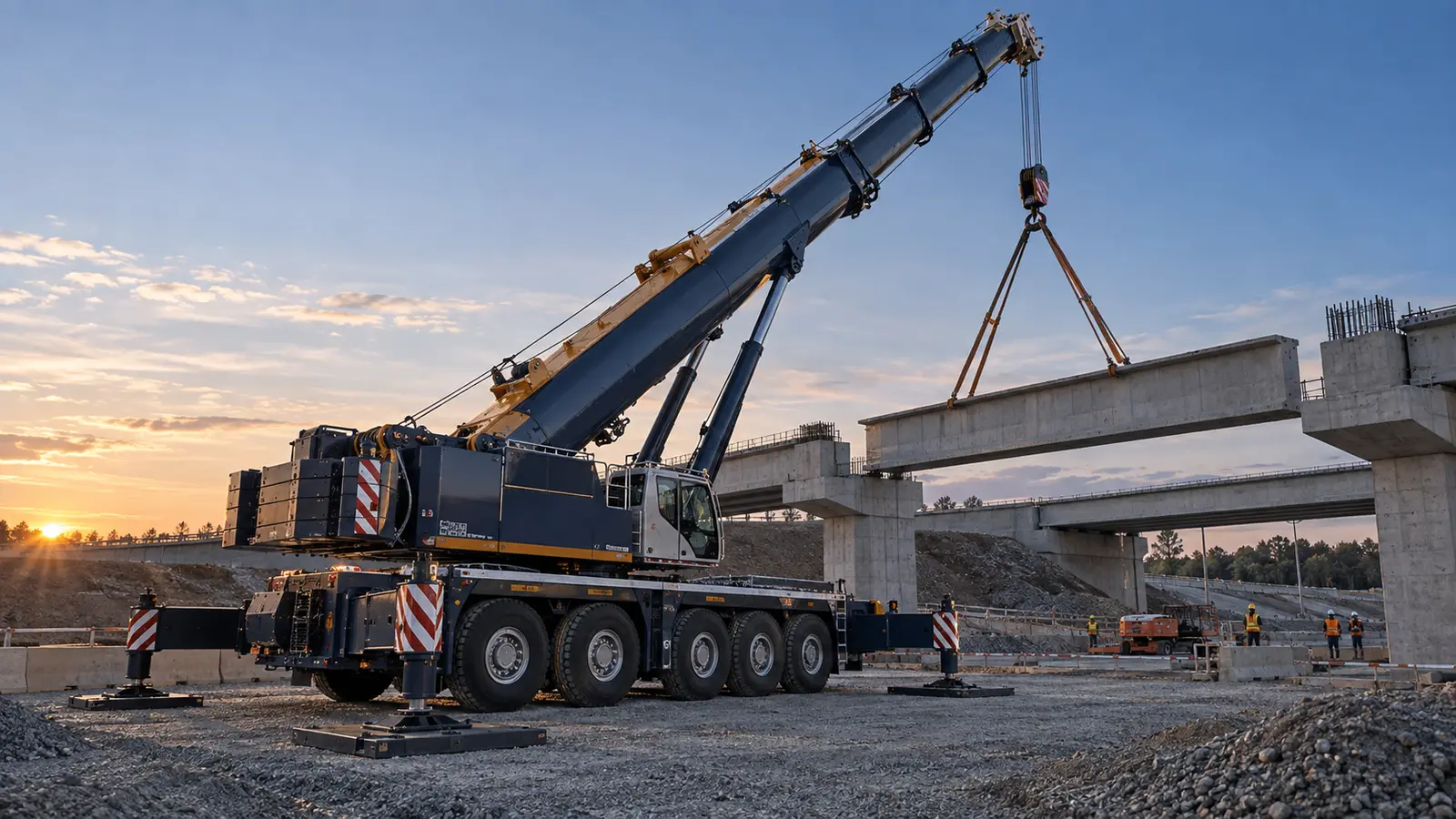
Mining, quarry and heavy-material sites combine substantial loads, demanding environments, long access routes and dispersed maintenance areas. A useful enquiry describes the material or equipment to be handled, the work path, known conditions and current asset, then identifies whether the need concerns equipment, attachments, parts or service. Calling an application “heavy duty” is not enough to confirm capacity, duty classification or environmental protection.
Potential lifting and handling equipment
The request may involve a mobile, rough-terrain or crawler crane for site tasks, an overhead or gantry crane for a maintenance area, or a heavy-duty forklift and other handling equipment according to the load. Hoppers, grabs, buckets and load attachments may also sit within the material path. The family alone does not establish compatibility; it must be connected to the load, radius, surface, environment, power and requested duty.
Repair, parts and maintenance programmes
An enquiry may cover repair, overhaul, runway and mechanical rehabilitation, electrical and controls upgrades, or recurring parts tied to named assets. Motors, gearboxes, brakes, wheels, ropes, hydraulics and electrical components require references, models and a documented compatibility basis. A maintenance contract defines assets, visits, call-outs, parts and reporting rather than assuming automatic coverage of every location and machine.
Information needed for review
Share the material or load type, dimensions and weight, travel distance, working radius and height, route, location, surface, power and requested hours or duty pattern. For an existing asset, add manufacturer, model, serial, condition, symptoms, photographs, drawings and available parts references. State the requested work period, site constraints, access and outage responsibilities without adding operating instructions or an unapproved diagnosis.
Organising sites and recurring orders
Where several machines or locations are involved, an asset register can organise service, parts and project enquiries by site while retaining shared requirements. Reordering parts creates a new draft because price, availability and shipping need fresh approval. Qualification produces a reviewable scope, information gaps, stages and responsibilities; it does not automatically reserve equipment, a service team or unverified stock.
The next step
Start with a defined equipment, part or service enquiry, or use the project and tender form when several workstreams or locations overlap. The available information is reviewed first, after which the proposal identifies items, responsibilities, information gaps, stages, validity and approved terms without assuming unsupported specifications or commitments.