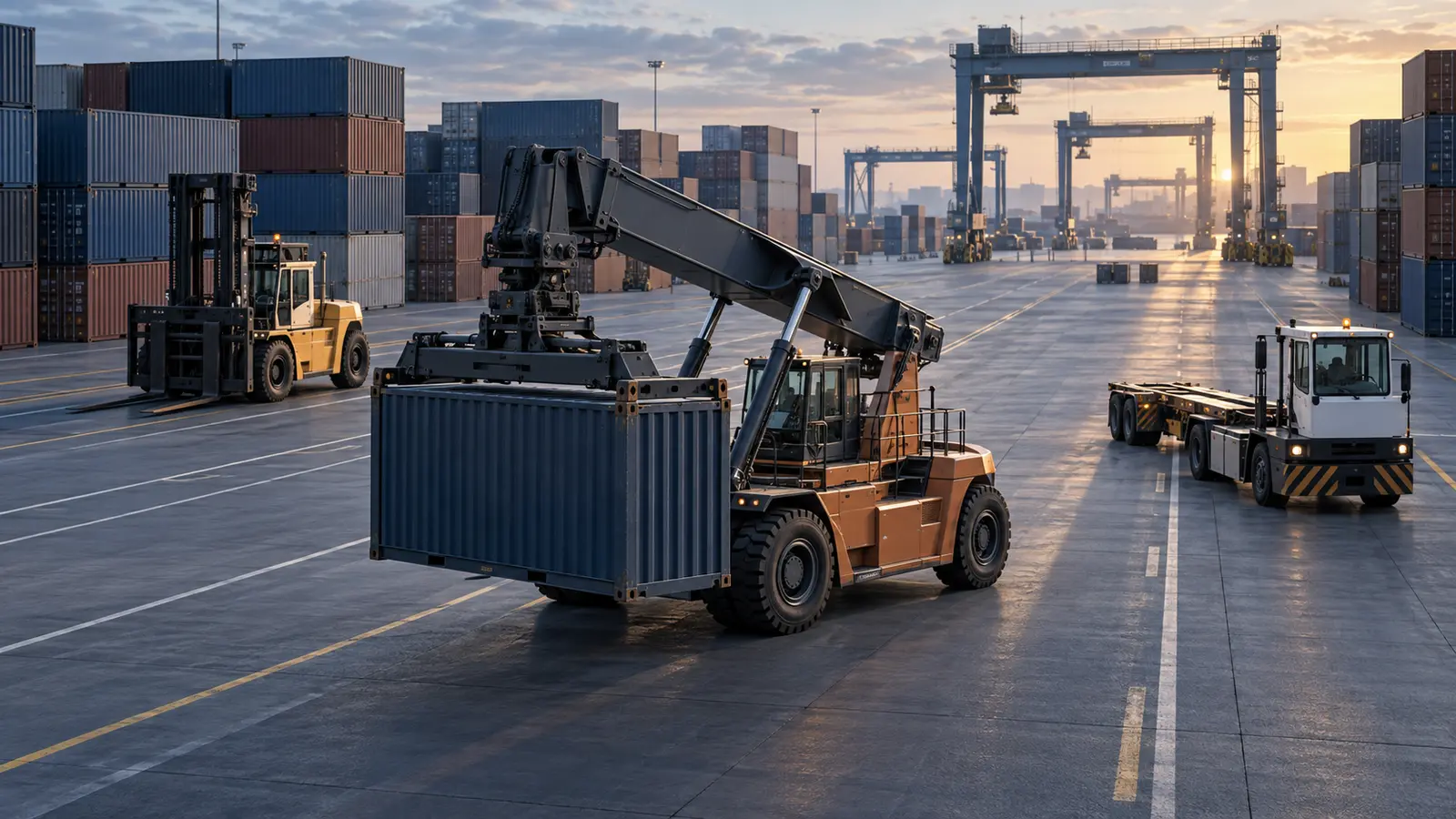
Handling requirements in a warehouse or logistics centre follow the load from receipt through storage, staging and handover. Equipment needs vary with load type, dimensions, centre, height, route, operating surface and movement pattern, and the boundary between yard and indoor equipment matters. Documenting that flow supports a suitable enquiry without turning the page into an automatic recommendation for a specific machine.
Yard and handling equipment
Requestable families may include reach stackers, empty-container handlers, heavy-duty forklifts, straddle carriers, terminal tractors, chassis and trailers. Inside the facility, an enquiry may also involve overhead or jib cranes and workstation systems according to the task. Grabs, attachments or parts for a named asset can be included as well. Selection depends on the load, layout, duty, power and actual interfaces.
Connected service and facility needs
Equipment supply can connect to installation, commissioning, training and handover where included in the proposal, or the customer may request maintenance, repair, rehabilitation or upgrades for existing assets. A yard package may also cover power, charging, lighting, internal roads or workshop needs within a clear project boundary. Listing those elements does not mean every site needs them or that execution is automatic; responsibilities and the qualified delivery route are reviewed by destination and scope.
Operating data that supports a proposal
Share the load or container type, dimensions, weight and centre where known, together with the travel route, distance, height, manoeuvring and storage areas, and handover points. Add the site layout, operating surface, power, requested hours or movement pattern, quantity and programme. For current assets, include model, serial, condition and available parts lists or records, keeping each location distinct in multi-site programmes.
From an equipment enquiry to an asset programme
A customer may request one machine, a parts list, a service intervention, a yard project or a multi-site contract. The Fleet Lifecycle package can coordinate maintenance, parts and upgrades across named assets while keeping each work order, price and approval separate. The proposal defines scope, stages, exclusions and required documents; an anticipated demand or framework ceiling is not treated as a confirmed purchase or realised revenue.
The next step
Start with a defined equipment, part or service enquiry, or use the project and tender form when several workstreams or locations overlap. The available information is reviewed first, after which the proposal identifies items, responsibilities, information gaps, stages, validity and approved terms without assuming unsupported specifications or commitments.